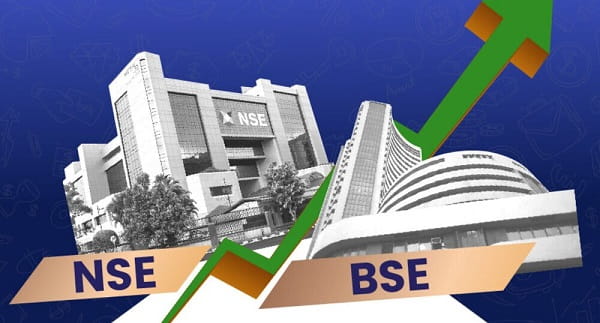
If someone starts learning about the Indian stock market, two names appear almost immediately — the NSE and the BSE. These are India’s two major stock exchanges where shares of companies are bought and sold every day.
For beginners, stock exchanges can seem complicated at first. Terms like Sensex, Nifty, market capitalization, trading volume, and indices often create confusion. But understanding the basic role of the NSE and BSE is actually quite simple.
These exchanges act like organized marketplaces where investors trade stocks, bonds, exchange-traded funds, and other financial securities.
What Is a Stock Exchange?
A stock exchange is a regulated marketplace where buyers and sellers trade financial securities.
It helps companies raise money from the public and allows investors to buy ownership shares in businesses.
Stock exchanges provide:
- Transparent trading systems
- Price discovery
- Market regulation
- Investor protection
- Liquidity for securities
In India, the two largest stock exchanges are:
- National Stock Exchange of India (NSE)
- Bombay Stock Exchange (BSE)
What Is the BSE?
The Bombay Stock Exchange is Asia’s oldest stock exchange.
It was established in 1875 in Mumbai and became an important center for Indian capital markets.
The BSE allows trading in:
- Stocks
- Mutual funds
- Bonds
- Derivatives
- Exchange-traded funds (ETFs)
Thousands of companies are listed on the BSE, making it one of the world’s largest exchanges by number of listed firms.
What Is the NSE?
The National Stock Exchange of India was established in 1992.
The NSE introduced fully electronic trading systems in India, which modernized the stock market significantly.
Today, the NSE is India’s largest stock exchange by trading volume.
It is especially dominant in:
- Equity trading
- Futures and options (F&O)
- Derivatives trading
The NSE became popular because of its advanced technology, transparency, and efficient trading systems.
Difference Between NSE and BSE
Although both exchanges serve similar purposes, there are some differences.
Age
- BSE is older and established in 1875
- NSE is newer and established in 1992
Trading Volume
The NSE generally has higher daily trading volumes.
Number of Listed Companies
The BSE has more listed companies overall.
Benchmark Indices
- BSE’s main index is the Sensex
- NSE’s main index is the Nifty 50
Both indices are widely used to measure market performance.
What Is the Sensex?
The Sensex is the benchmark index of the Bombay Stock Exchange.
The word “Sensex” comes from “Sensitive Index.”
It tracks 30 major companies listed on the BSE across different industries.
When people say:
- “The Sensex went up”
or - “The market crashed today”
they are often referring to movements in this index.
The Sensex reflects the general health of India’s stock market and economy.
What Is the Nifty 50?
The Nifty 50 is the benchmark index of the National Stock Exchange of India.
It tracks 50 large companies across multiple sectors.
The term “Nifty” combines:
- National
- Fifty
The Nifty is widely followed by traders, investors, mutual funds, and financial institutions.
How Companies Get Listed
A company can list its shares on the NSE or BSE through an Initial Public Offering (IPO).
During an IPO:
- The company offers shares to the public
- Investors purchase ownership stakes
- The company raises capital for expansion
After listing, shares trade regularly on stock exchanges.
Companies like Reliance Industries, Infosys, and Tata Consultancy Services are traded on both exchanges.
How Trading Happens
Modern stock trading is completely electronic.
Investors buy and sell shares through:
- Stockbrokers
- Trading apps
- Online platforms
Popular broker platforms in India include:
- Zerodha
- Groww
- Angel One
Orders are matched automatically through exchange systems.
Role of SEBI
The Indian stock market is regulated by the Securities and Exchange Board of India, commonly called SEBI.
SEBI’s role includes:
- Protecting investors
- Preventing fraud
- Regulating stock exchanges
- Monitoring market practices
- Ensuring transparency
Without regulation, stock markets could become highly risky and unfair.
Why Stock Exchanges Are Important
Stock exchanges are important for both companies and investors.
For Companies
They help businesses:
- Raise capital
- Expand operations
- Improve public visibility
- Attract investors
For Investors
They allow people to:
- Invest in businesses
- Build long-term wealth
- Earn dividends
- Trade shares
Stock exchanges also support overall economic growth.
Risks of Stock Market Investing
Although stock markets offer wealth-building opportunities, they also involve risks.
Share prices can rise or fall because of:
- Company performance
- Economic conditions
- Global events
- Interest rates
- Investor sentiment
Beginners should avoid investing without understanding risks properly.
The Rise of Retail Investors in India
India has seen a huge increase in retail investors in recent years.
Factors driving this growth include:
- Smartphone trading apps
- Financial awareness on social media
- Easy online account opening
- Increased digital payments
Younger investors are entering the market earlier than previous generations.
The Future of Indian Stock Exchanges
India’s stock market ecosystem continues evolving rapidly.
Future developments may include:
- Greater AI-based trading systems
- Faster settlement mechanisms
- More retail participation
- Expansion of digital investing platforms
- Increased global investment flows
As India’s economy grows, the importance of the NSE and BSE is likely to increase even further.
FAQs
Q: What is the full form of NSE?
A: NSE stands for National Stock Exchange of India.
Q: What is the full form of BSE?
A: BSE stands for Bombay Stock Exchange.
Q: What is the difference between Sensex and Nifty?
A: Sensex is the benchmark index of the BSE with 30 companies, while Nifty 50 is the benchmark index of the NSE with 50 companies.
Q: Which is bigger: NSE or BSE?
A: The NSE generally has higher trading volumes, while the BSE has more listed companies.
Q: Who regulates the Indian stock market?
A: The Securities and Exchange Board of India regulates the Indian stock market and stock exchanges.
