Corporate Social Responsibility, commonly called CSR, has become an important part of India’s corporate and legal framework. Earlier, many businesses treated charity and community support as voluntary activities. Today, certain companies in India are legally required to spend part of their profits on social development activities.
India became one of the first countries in the world to introduce mandatory CSR spending through company law. The goal was to encourage businesses to contribute toward education, healthcare, environmental protection, rural development, and other public welfare initiatives.
CSR laws have changed how many Indian corporations approach social responsibility. Large companies now operate structured CSR programs instead of occasional donations or charity events.
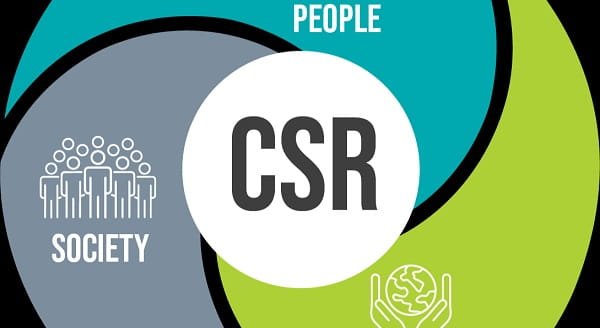
What Is Corporate Social Responsibility (CSR)?
Corporate Social Responsibility refers to the ethical responsibility of businesses toward society and the environment.
CSR activities may include:
- Education support
- Healthcare projects
- Environmental sustainability
- Rural development
- Women empowerment
- Skill development
- Disaster relief
- Community welfare programs
The idea behind CSR is that businesses should contribute to society while earning profits.
Introduction of CSR Law in India
India formally introduced mandatory CSR provisions under the Companies Act 2013.
Section 135 of the Act made CSR spending compulsory for certain companies meeting specific financial criteria.
This law became effective in 2014 and marked a major shift in India’s corporate governance system.
Which Companies Must Follow CSR Rules?
CSR provisions apply to companies that meet at least one of the following conditions during a financial year:
- Net worth of ₹500 crore or more
- Annual turnover of ₹1,000 crore or more
- Net profit of ₹5 crore or more
These companies must spend at least 2% of their average net profits from the previous three financial years on eligible CSR activities.
Both Indian companies and foreign companies operating in India may fall under CSR requirements if they meet the criteria.
Role of the CSR Committee
Companies covered under CSR rules must form a CSR Committee of the Board.
The committee generally:
- Recommends CSR activities
- Suggests spending plans
- Monitors project implementation
- Ensures compliance with CSR policies
The board of directors ultimately approves and oversees CSR initiatives.
Areas Where CSR Funds Can Be Used
The government provides a list of approved CSR activities under Schedule VII of the Companies Act.
Common CSR sectors include:
Education
Companies often fund:
- Schools
- Scholarships
- Digital learning programs
- Skill training centers
Healthcare
CSR funds may support:
- Hospitals
- Medical camps
- Vaccination drives
- Public health initiatives
Environmental Protection
Many firms invest in:
- Tree plantation
- Water conservation
- Renewable energy projects
- Waste management systems
Rural Development
Companies may improve:
- Roads
- Sanitation
- Drinking water systems
- Village infrastructure
Women Empowerment
CSR programs also support:
- Women’s education
- Financial inclusion
- Entrepreneurship initiatives
- Self-help groups
Why India Introduced Mandatory CSR
Several reasons influenced India’s decision to make CSR spending compulsory.
Reducing Social Inequality
India has large gaps in education, healthcare, and income distribution.
CSR funds help support development projects in underserved areas.
Encouraging Corporate Participation
The government wanted businesses to play a more active role in nation-building.
Structured Social Spending
Mandatory CSR encourages organized and transparent social investment instead of random charity.
Public Accountability
Companies are expected to operate responsibly while benefiting from economic growth opportunities.
How Companies Implement CSR Projects
Companies can carry out CSR activities:
- Directly through their own teams
- Through registered NGOs
- Via charitable foundations
- Through government-approved implementation agencies
Many large corporations establish separate CSR foundations to manage projects professionally.
Companies like Tata Group, Infosys, and Reliance Industries run major CSR programs across India.
CSR Reporting and Disclosure Requirements
Companies must disclose CSR-related information in:
- Annual reports
- Board reports
- Financial filings
Details generally include:
- Amount spent
- CSR activities conducted
- Ongoing projects
- Unspent CSR funds
This improves transparency and accountability.
What Happens If Companies Do Not Spend CSR Funds?
CSR compliance rules became stricter over time.
If companies fail to spend the required amount:
- They must explain the reasons in their board report
- Certain unspent amounts may need to be transferred to specified government funds or special accounts
The government strengthened enforcement to ensure companies take CSR obligations seriously.
Criticism and Challenges of CSR Laws
Although CSR laws are widely discussed globally, they also face criticism.
Forced Charity Debate
Some critics argue that mandatory CSR turns social responsibility into a legal obligation instead of voluntary ethics.
Quality of Spending
Not all CSR projects create meaningful long-term impact.
Some firms focus more on visibility and branding rather than sustainable development.
Compliance Complexity
Smaller eligible companies sometimes struggle with:
- Reporting requirements
- Project monitoring
- Regulatory compliance
Greenwashing and PR Concerns
Certain companies are accused of using CSR mainly for public image improvement rather than genuine social contribution.
Positive Impact of CSR in India
Despite challenges, CSR laws have contributed to:
- Increased social investment
- Better corporate accountability
- Expanded rural development projects
- Greater support for education and healthcare
Large amounts of CSR funding now flow into social development initiatives annually.
CSR also encouraged businesses to think more seriously about long-term sustainability and community welfare.
ESG and CSR Are Becoming Connected
Today, CSR is increasingly linked with ESG goals:
- Environmental
- Social
- Governance
Companies now combine CSR with broader sustainability and responsible business strategies.
This includes:
- Climate action
- Diversity initiatives
- Ethical governance
- Sustainable supply chains
The role of CSR is expanding beyond charity into long-term corporate responsibility.
The Future of CSR in India
India’s CSR framework will likely continue evolving.
Future trends may include:
- Greater impact measurement
- More transparency through digital reporting
- Stronger ESG integration
- Increased rural technology initiatives
- Skill-focused CSR programs
As businesses become more influential in society, public expectations around corporate responsibility are also increasing.
CSR is no longer viewed only as a legal requirement. For many companies, it has become part of brand reputation, stakeholder trust, and long-term business strategy.
FAQs
Q: What is CSR?
A: CSR stands for Corporate Social Responsibility, which refers to business activities that contribute to social and environmental welfare.
Q: Which law governs CSR in India?
A: CSR provisions are governed under the Companies Act 2013.
Q: How much must eligible companies spend on CSR?
A: Eligible companies must spend at least 2% of their average net profits from the previous three financial years on CSR activities.
Q: Is CSR mandatory in India?
A: Yes. CSR spending is mandatory for companies meeting specified financial thresholds under Indian law.
Q: Can companies use CSR funds for employee benefits?
A: No. CSR funds cannot generally be used for activities benefiting only employees or their families.
