Many salaried employees in India rely completely on the health or life insurance provided by their employer. Group insurance policies offered by companies often create a sense of financial security because they provide medical coverage at little or no direct cost to employees. However, an important question remains — Is your office insurance cover really enough?
While group insurance plans offer convenience and affordability, they may not always provide adequate long-term financial protection. On the other hand, personal insurance policies offer greater control, flexibility, and continuity.
Understanding the difference between group insurance and personal insurance can help you build a stronger financial safety net for yourself and your family.
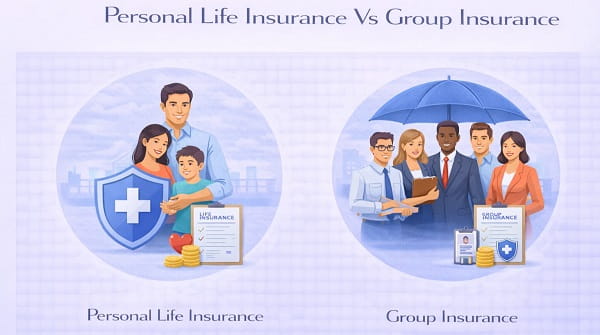
What is Group Insurance?
Group insurance is a policy purchased by an employer, organization, or institution to provide insurance coverage to a group of people, usually employees.
The employer typically pays the premium either fully or partially.
Common Types of Group Insurance
- Group health insurance
- Group life insurance
- Group accidental insurance
Employees are automatically covered under the company’s policy during their employment period.
What is Personal Insurance?
Personal insurance is an individual policy purchased directly by a person from an insurance company.
The policyholder controls:
- Coverage amount
- Add-ons and riders
- Policy duration
- Nominee details
Personal insurance remains active as long as premiums are paid, regardless of employment status.
Group Insurance vs. Personal Insurance: Comparison
| Feature | Group Insurance | Personal Insurance |
| Policy Owner | Employer/Organization | Individual |
| Premium Payment | Paid by employer or shared | Paid by policyholder |
| Coverage Continuity | Ends when job ends | Continues independently |
| Customization | Limited | High flexibility |
| Sum Insured | Often limited | Can choose higher coverage |
| Medical Check-Up | Usually not required | Often required |
| Family Coverage | Depends on employer policy | Can be customized |
| Portability | Limited | Fully portable |
| Add-On Riders | Limited options | Multiple rider choices |
| Long-Term Security | Moderate | Strong |
Why Group Insurance is Popular
Group insurance has become common among Indian companies because it provides affordable employee benefits.
1. No Medical Tests
Most employees receive coverage without undergoing detailed health check-ups.
2. Low or Zero Cost
The employer usually bears most of the premium cost.
3. Immediate Coverage
Employees often receive insurance benefits from the joining date.
4. Easier Claim Process
Corporate tie-ups and cashless hospitalization make claims more convenient.
These benefits make group insurance attractive, especially for young employees.
Limitations of Group Insurance
Although office insurance is helpful, depending only on it can be risky.
1. Coverage Ends with Job Change
If you resign, lose your job, or retire, the insurance coverage usually stops immediately.
This can become dangerous if a medical emergency occurs during unemployment.
2. Limited Sum Insured
Many employer policies provide basic coverage such as ₹3–5 lakh, which may not be enough in metro cities where medical costs are rising rapidly.
3. Limited Customization
Employees usually cannot modify policy terms, add riders freely, or select specific features.
4. Family Coverage Restrictions
Some companies may not include parents or may offer very limited dependent coverage.
5. No Long-Term Continuity Benefits
Personal insurance benefits like cumulative bonuses and long-term loyalty rewards may not be available.
Advantages of Personal Insurance
1. Lifetime Financial Protection
The policy remains active regardless of employment changes.
2. Higher Coverage Options
You can choose larger sum insured amounts based on your financial needs.
3. Better Control
Policyholders can customize riders, deductibles, and add-ons.
4. Protection During Career Breaks
Coverage continues even during unemployment, freelancing, or business ventures.
5. Long-Term Benefits
Many personal policies offer:
- No Claim Bonus (NCB)
- Restoration benefits
- Wellness rewards
- Lifetime renewability
Cost Analysis: Which Option Saves More?
Group Insurance: Short-Term Savings
Group insurance saves money because employees either pay nothing or contribute a small amount.
Example:
A company may provide:
- ₹5 lakh health cover
- Free annual premium
This creates immediate savings for employees.
However, the low cost comes with limited long-term security.
Personal Insurance: Better Long-Term Value
Personal insurance involves regular premium payments but provides greater financial stability.
Example:
Suppose a person buys:
- ₹15 lakh personal health insurance
Even if they change jobs multiple times, coverage continues uninterrupted.
Additionally, buying personal insurance at a younger age usually results in lower premiums and fewer policy restrictions.
Is Your Office Insurance Cover Enough?
For most people, the answer is No.
Employer-provided insurance should be considered a supplementary benefit, not a complete financial protection plan.
Your office cover may be insufficient if:
- You have dependent parents.
- You live in a metro city with high medical expenses.
- You have lifestyle-related health risks.
- Your family needs higher protection.
- You plan to switch jobs frequently.
Financial experts often recommend having a separate personal health insurance policy even if you already have group coverage.
Best Strategy: Combine Both Policies
A practical approach is to use:
- Group insurance for basic corporate coverage
- Personal insurance for long-term financial security
This combination provides:
- Higher total coverage
- Better protection during job changes
- Reduced personal financial burden during emergencies
Important Things to Check in Office Insurance
Before relying on employer insurance, check:
- Sum insured amount
- Room rent limits
- Co-payment clauses
- Parent coverage availability
- Pre-existing disease coverage
- Coverage after resignation
- Claim settlement process
Understanding these details helps avoid unpleasant surprises during medical emergencies.
Conclusion
Group insurance is an excellent employee benefit that provides affordable and immediate financial protection. However, it may not offer sufficient long-term security because coverage depends on your employment status and company policy terms.
Personal insurance, although costlier, provides independent, customizable, and lifelong financial protection.
If your goal is complete financial safety for yourself and your family, relying only on office insurance may not be enough. A balanced combination of group and personal insurance often provides the strongest financial protection against rising healthcare costs and life uncertainties.
FAQs
Q: Is employer-provided insurance enough?
A: Usually not. Employer insurance often provides limited coverage and ends when employment ends.
Q: Can I keep my group insurance after leaving the job?
A: In many cases, no. Some insurers may allow policy conversion, depending on terms.
Q: Why should I buy personal insurance if I already have office cover?
A: Personal insurance provides long-term independent protection regardless of employment status.
Q: Which insurance is cheaper?
A: Group insurance is generally cheaper because employers share or pay the premium.
Q: Does group insurance cover family members?
A: It depends on the employer’s policy. Some plans include spouse and children, while others may exclude parents.
Q: Is medical check-up required for personal insurance?
A: Often yes, especially for higher coverage amounts or older applicants.
Q: What is the biggest advantage of personal insurance?
A: The biggest advantage is continuous lifelong coverage with customizable benefits.
