Fast-Moving Consumer Goods (FMCG) are the everyday products people buy again and again—soap, toothpaste, snacks, packaged foods, detergents, soft drinks, and more. These products move quickly off the shelves, have low margins, and rely on high sales volume. The FMCG business model looks simple from the outside, but behind the scenes, the strategy is sharp, layered, and very profit-driven.
Below is a detailed look at how FMCG companies structure their business and the exact ways they earn money.
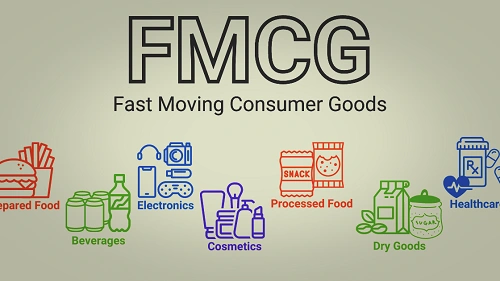
What Exactly Is the FMCG Business Model?
The FMCG model is built on four pillars:
- High-volume sales
- Low per-unit margin
- Wide distribution networks
- Strong brand positioning
Companies focus on selling millions of units daily rather than making high profits from each item. This works because these products are essential, frequently purchased, and have repeat demand.
Key Components of an FMCG Business
a) Product Design and Manufacturing
FMCG companies invest heavily in R&D to create products that are cheap to produce but attractive to consumers.
They also maintain manufacturing efficiency to keep production costs low.
b) Distribution Network
This includes distributors, wholesalers, retailers, supermarkets, and online platforms. The goal is simple:
make the product available everywhere.
c) Marketing and Branding
Advertising plays a huge part. Strong branding builds trust, which is vital in markets filled with similar products.
d) Retail and Consumer Insights
Companies constantly track consumer behavior and adjust their product size, price, and packaging to match market demand.
How Do FMCG Companies Actually Make Money?
Below is the most important section: the revenue engines.
a) High Sales Volume
Even if a company earns only ₹2–₹5 profit per product, selling crores of units daily creates massive revenue.
For example, a ₹10 biscuit packet may earn a tiny margin per piece, but multiplied across millions of buyers, the profit becomes huge.
b) Margin Layering in the Supply Chain
FMCG companies use a tiered pricing system:
| Stage | Example Margin |
| Company → Distributor | 6–12% |
| Distributor → Retailer | 8–15% |
| Retailer → Customer | 10–20% markup |
The company keeps its internal manufacturing margin plus a slice of distribution margin.
This layered system ensures steady cash flow across the chain.
c) Economies of Scale
Producing at higher volumes lowers per-unit cost.
For example:
- Bulk raw materials = cheaper cost
- Larger production runs = cheaper manufacturing
- Advertising cost spreads across millions of units
This difference between low cost and high volume selling price creates profit.
d) Brand Loyalty and Repeat Purchases
Once a consumer is loyal to a brand like Colgate or Maggi, they tend to buy it again and again without thinking.
This repeat cycle generates long-term revenue at near-zero additional marketing cost.
e) Product Line Expansion
FMCG companies earn more by launching variants:
- New flavors
- New sizes
- Premium versions
- Budget versions
This helps them cover every price segment and attract wider audiences.
f) Retailer Push Schemes
Companies offer incentives to retailers:
- Cashback
- Extra margin
- Display incentives
- Free units
Retailers then prefer to sell that brand more, increasing the company’s sales.
g) Strategic Pricing
FMCG pricing is smart:
- Low-cost packs (₹1, ₹5, ₹10) bring mass sales
- Mid-range packs earn steady margins
- Large packs earn higher profit per unit
- Premium products generate premium margins
This combination improves the overall profit line.
h) Shelf Dominance
Companies pay supermarkets for:
- Eye-level shelf placement
- Exclusive racks
- Branding inside stores
Better visibility means higher sales.
i) Cash-and-Carry Advantage
Retailers usually pay FMCG distributors quickly, often in 24–48 hours.
This rapid cash cycle strengthens company liquidity and reduces credit risk.
j) International Expansion
Many FMCG giants operate worldwide.
Once a brand succeeds in one market, they scale it internationally, multiplying revenue.
What Keeps FMCG Profitable Despite Low Margins?
FMCG profits come from a mix of:
- Huge consumer demand
- Frequent repurchases
- Efficient supply chains
- Low manufacturing cost
- Strong branding
- Wide availability
Even during economic slowdowns, FMCG sales remain stable because people still need soap, shampoo, and food products.
Challenges FMCG Companies Face
Even though the model is strong, there are hurdles:
- Rising raw material prices
- Competition from local brands
- Changing consumer choices
- E-commerce disrupting distribution
- Maintaining brand trust
Companies constantly upgrade their strategy to stay profitable.
The Future of FMCG Earnings
The next phase of revenue growth will come from:
- E-commerce and quick-delivery apps
- Eco-friendly and organic products
- Personalised packaging sizes
- AI-driven consumer insights
- Rural market expansion
FMCG companies that adapt quickly will continue making strong profits.
Conclusion
The FMCG business model is built on high volume, massive distribution, tight cost control, and strong branding. Companies don’t rely on big margins per product; instead, they earn money through scale, repeat purchases, supply chain margins, and clever marketing. This combination makes FMCG one of the most stable and profitable industries worldwide.
