Barclays is a service-based company. Barclays, a prominent participant in the banking and financial services sector, was founded in 1690. Its main sources of income are service delivery and continuing customer interaction. It provides intangible services, client testimonials, and innovations targeted at service enhancement. It is a service-based business because of its varied skill sets for all-encompassing service delivery, emphasis on vendor management and partnerships, process, and service delivery innovation.
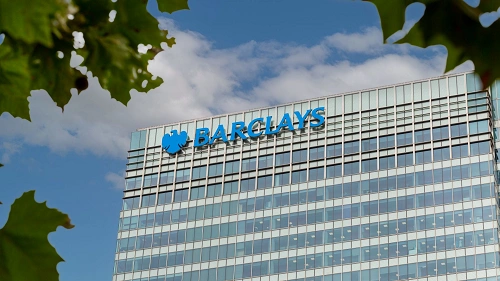
Here is a quick overview of Barclays
| Details | Info |
| Founded | 1690 |
| Founders | John Freame & Thomas Gould |
| Headquarters | London, United Kingdom |
| CEO | C. S. Venkatakrishnan |
| Industry | Banking & Financial Services |
| Services | Retail Banking, Credit Cards, Corporate Banking, Investment Banking, Wealth Management |
| Area Served | Europe, Americas, Asia, Africa |
| Employees | 80,000+ (approx.) |
| Official Website | www.barclays.com |
Company History
The founding of Barclays dates back to November 17, 1690, when two Quakers, John Freame and Thomas Gould, began working as goldsmith bankers on Lombard Street in London. When James Barclay, Freame’s son-in-law, joined the company as a partner in 1736, the name “Barclays” began to be linked with it. Barclays expanded its branch network by acquiring local English banks between 1905 and 1916. Following its 1918 merger with the London, Provincial, and South Western Bank and its 1919 acquisition of the British Linen Bank, Barclays continued to grow.
Current Status
The headquarters of the British international universal bank Barclays PLC are located in London, England. The UK Consumer Bank, Investment Bank, UK Corporate Bank, Private Bank and Wealth Management (PBWM), and US Consumer Bank are the five business units of Barclays.
Future Outlook
Our Simpler, Better, and More Balanced plan was introduced in February 2024 in an effort to set up the bank for increased returns and revenue development. With a new set of financial targets for 2026–2028, Barclays is now expanding on these foundations to boost returns for the bank and make it resilient in a variety of conditions. In order to assure consistently greater returns after 2028, they are investing and accelerating our ambition.
By simplifying the organization, promoting digital adoption and standardizing data and platforms, lowering complexity and enhancing resilience, improving financial returns and customer experience, utilizing digital and artificial intelligence to facilitate revenue growth and efficiencies, strengthening customer relationships, maintaining capital discipline, diversifying sources of net interest income, and speeding up fee growth, they meet their 2028 goals.
